

Prerequisites
- Network membership with the querier role (and furnisher role to contribute), arranged with your SOLO account manager.
- A bearer token exported as
SOLO_TOKEN. - Your
network_id, and the product’sproduct_idfor the coverage check.
1
Identify the subject
Find an existing profile so reuse and any later contribution consolidate on
one consumer.
2
Record consent
Capture the subject’s permission and keep the
consent_id.3
Ask what verified work already exists
The coverage check is non-billable and
answers the reuse question directly: which furnishers already hold complete
data for this subject and product?If any furnisher is
complete: true, reusable trust assets exist — query
them in the next step. If none are, skip to step 5 and do the work yourself.4
Reuse: query the certificate
200— reuse the consolidated certificate. Each populated sub-product carries its source’sfurnishing_entity_idandattestation_id, so the reuse is fully attributed.204— nothing you’re entitled to read satisfied the policy. Treat it as “do the missing work,” not as an error.
5
Do only the missing work, then furnish it
Verify whatever the network couldn’t supply, then contribute it back so the
next participant reuses it — and so you earn
entitlement to read this subject later.
The decision rule
Every step exists to push work onto the network before it falls on you:- Identify so contributions consolidate, not fragment.
- Check (free) before you query (billable).
- Reuse on
200; complete only the gaps on204or partial coverage. - Furnish what you verified, turning a one-off cost into a reusable asset.
Related
In the dashboard
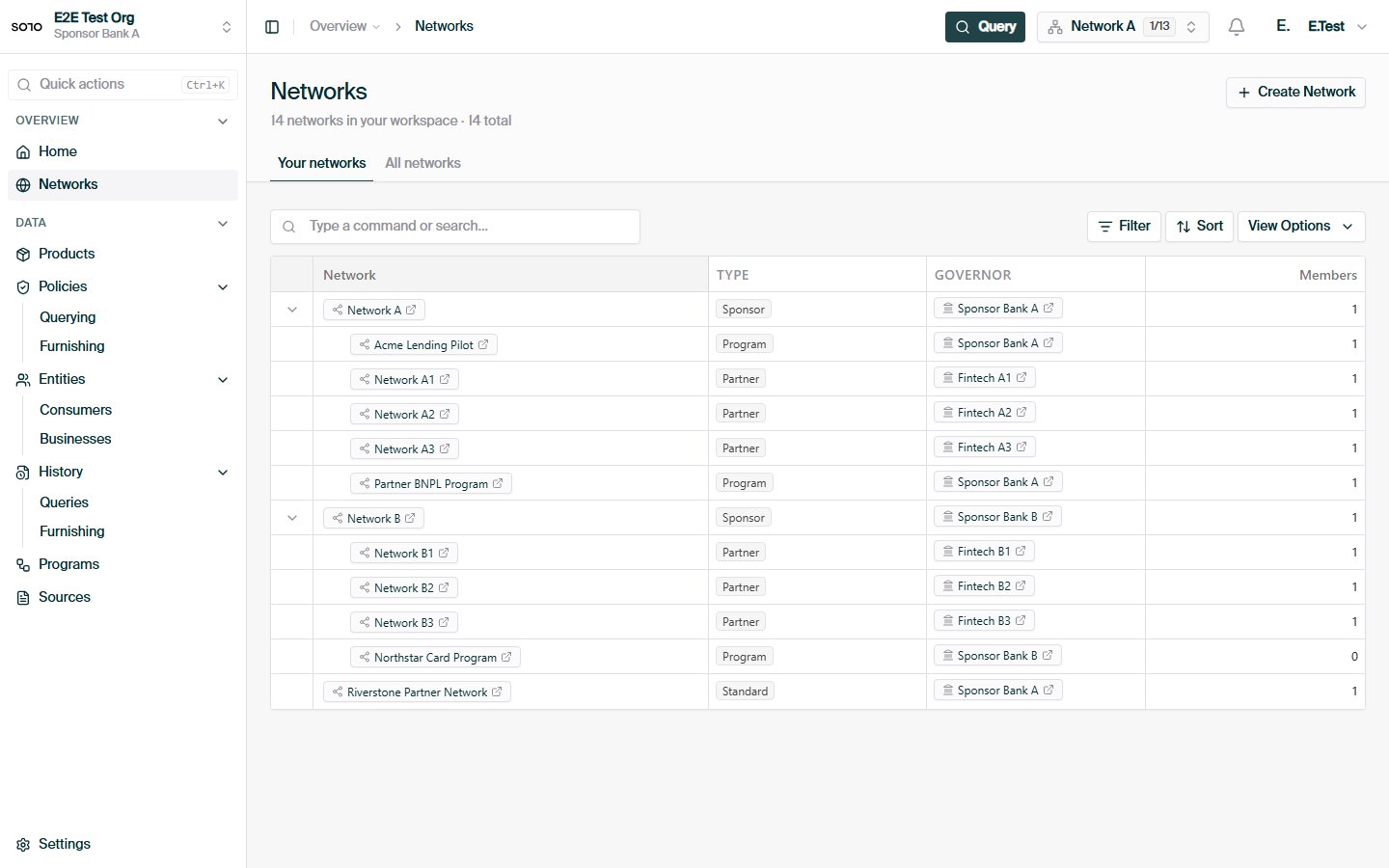
Networks list — newly created network visible
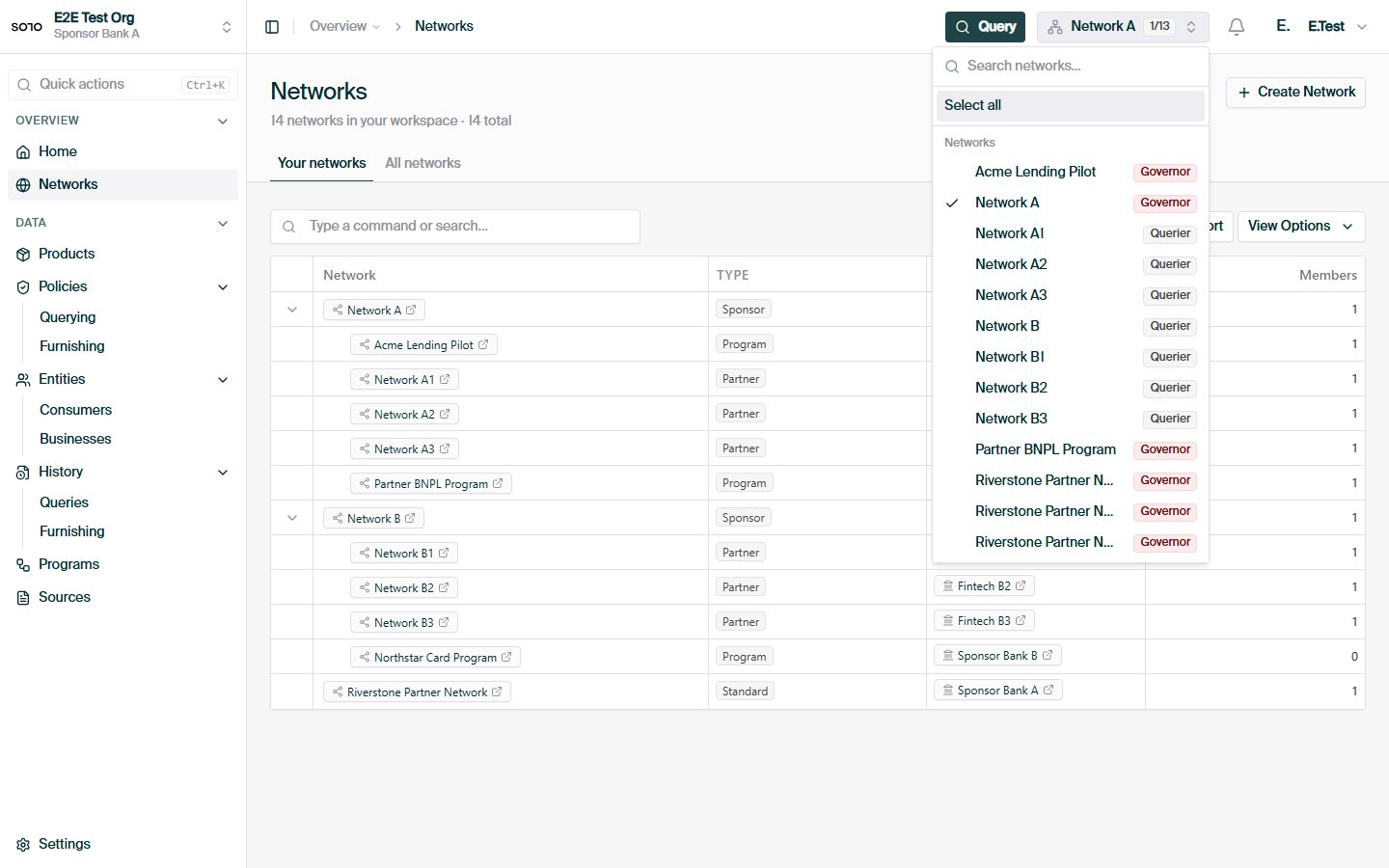
Topbar network multiselect open
Business lending onboarding
The same pattern on the business / KYB side.
Network consumption
Request anatomy, 200 vs 204, and the control plane.
Coverage check
The non-billable reuse pre-flight.
Trust assets
What you’re reusing and creating.